A truck’s arrival at a port of entry is only one part of moving commercial freight across the border. Importers and carriers also coordinate customs reporting, accounting, shipment records, duties, delivery information, and internal controls while working to limit delays.
CSA certification in Canada is a common industry term for participation in the Customs Self-Assessment program administered by the Canada Border Services Agency (CBSA). The CSA program is designed for eligible, low-risk importers and carriers seeking streamlined customs processing. Approval does not remove cross-border customs compliance responsibilities. It changes how qualifying shipments and accounting information are managed.
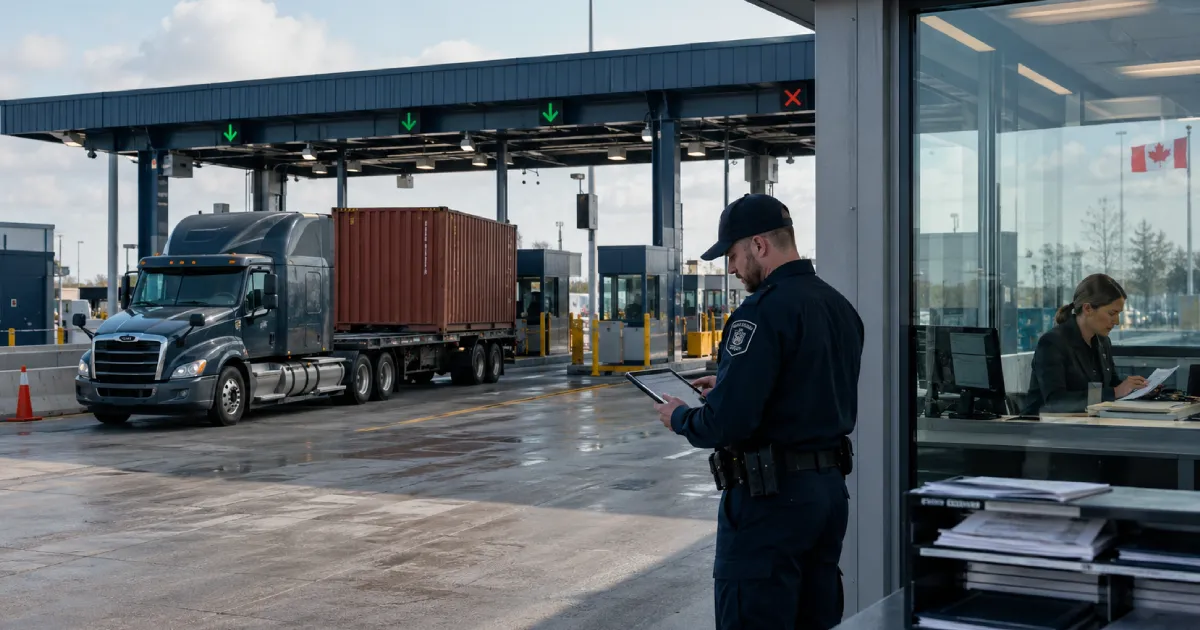
The Customs Self-Assessment program is a CBSA initiative for eligible, low-risk importers and carriers. It streamlines certain customs clearance and accounting procedures while requiring approved participants to maintain suitable systems, controls, and records.
Although the phrase “CSA certification” is sometimes used informally, “CSA authorization” more accurately describes approval to participate in the program. This distinction helps differentiate the customs program from product certifications required for market access.
The CSA program in Canada is unrelated to the organization commonly associated with product certification. That organization develops standards and provides testing, inspection, and certification services for electrical equipment and other regulated products.
A safety mark, product standard, or safety regulation therefore serves a different purpose than Customs Self-Assessment. Companies researching certification for products entering a regulated market are dealing with a separate framework involving product standards, regulatory compliance, and market access.
Several trusted-trader programs apply to related cross-border activities, but each has a different purpose:
Businesses participating in several programs must understand how each program fits into their operating model rather than treating the approvals as interchangeable.
Importers and carriers perform different functions in the CSA clearance process, so CSA program requirements are not identical.
| Eligibility area | Importers | Carriers |
|---|---|---|
| Business presence | Qualifying presence based on residency requirements | Qualifying presence based on residency requirements |
| Operating history | Commercial importing history | Commercial transportation history |
| Financial position | Solvency and applicable security | Solvency and applicable financial security requirements |
| Compliance | Acceptable legal and customs compliance history | Acceptable legal and transportation compliance history |
| Systems | Customs accounting and transaction controls | Shipment, dispatch, delivery, and audit controls |
Eligible importers and carriers may be based in either Canada or the United States, subject to the applicable residency requirements.
Importer eligibility generally involves corporate structure and location, commercial importing activity, financial standing, legal and customs compliance history, customs accounting systems, and internal controls for record management. The agency evaluates whether the importer’s systems support accurate reporting under applicable customs regulations.
Carrier eligibility includes similar corporate and legal considerations, plus transportation history, carrier identification, financial security, and bonded carrier requirements.
A CSA-approved importer and a CSA-approved carrier hold separate authorizations. Approval of one party does not automatically approve the other. For a business operating through multiple entities, terminals, divisions, or third-party transportation arrangements, an eligibility assessment helps identify potential issues before the business commits substantial resources to the full application process.
The CSA application review extends beyond basic eligibility. The Canada Border Services Agency reviews both the applicant organization and the systems used to manage customs activities. A company can appear suitable for CSA certification based on its corporate profile yet still have gaps in day-to-day records, responsibilities, or controls.
The CSA risk assessment considers the applicant’s overall compliance profile. Depending on whether the applicant is an importer, a carrier, or both, the review covers:
The purpose is not product certification or safety certification. The CBSA is assessing whether the applicant presents an acceptable level of customs risk and can meet the program’s ongoing requirements.
CSA business systems and audit trails are another central part of the review. The CBSA looks for systems that support accurate reporting, accounting, shipment control, record retention, and traceability between commercial transactions and customs records.
The exact evidence depends on the applicant’s role. A carrier’s systems may center on dispatch, movement, and delivery records, while an importer’s systems are tied more closely to accounting and transactions involving imported goods.
Applications and ongoing program participation are administered through the CARM Client Portal. The portal is part of Canada’s customs environment, but access alone does not establish that program criteria are satisfied. The effectiveness of the applicant’s controls and compliance systems remains the key issue.
Authorization changes how eligible shipments may be processed at the Canadian border. Compared with conventional shipment-by-shipment reporting, the CSA program can reduce transaction-level data requirements for qualifying movements.
The CSA clearance process applies only when all applicable conditions are met. Generally, the importer and carrier must hold the applicable authorization, the driver must meet program requirements, and the shipment must contain CSA-eligible goods.
For example, a shipment from the United States moving to a consignee in Canada may use streamlined processing when the importer, carrier, driver, goods, and route meet the applicable conditions. If one of these requirements is not met, the shipment must follow another CBSA reporting process.
That distinction is especially relevant for companies handling mixed freight, regulated goods, safety-sensitive cargo, or shipments subject to additional regulations. CSA certification does not create unrestricted market access or replace other Canadian certification, product safety, or standard requirements.
Authorization does not remove recordkeeping, customs accounting, duties and taxes, compliance reviews, shipment-control duties, or ongoing system maintenance. The CSA program in Canada changes the process for eligible movements but does not eliminate responsibility for accurate customs reporting and compliance.
For cross-border companies, the operational value comes from ensuring that authorization, internal controls, and shipment eligibility remain aligned before the freight reaches the border.

A company may appear ready for CSA certification in Canada yet still encounter issues during the review. Gaps often involve unclear responsibilities, disconnected records, unresolved bonding questions, or poorly documented operational changes.
The CSA risk assessment becomes more complex when business entities, carrier codes, divisions, or terminals share responsibility. Customs records, dispatch, delivery, and accounting data are spread across different teams. Unclear accountability weakens the level of control expected under the program.
CSA business systems and audit trails must connect relevant commercial, accounting, shipment, and delivery information. Records may exist separately but lack a reliable link.
This gap is especially relevant when new product lines enter the Canadian market or a product is subject to another safety standard or regulation. The CBSA needs confidence that information can be traced across the operation.
Unresolved questions about bonded carrier requirements, financial security, importing history, transportation history, third-party dispatch, or subcontracted freight affect CSA certification readiness.
CSA authorization does not end cross-border customs compliance. Changes in ownership, routes, systems, safety controls, product handling, business activities, or regulatory requirements can affect continued participation. CSA-eligible goods must still meet the applicable requirements for each movement.
An early readiness review helps identify gaps before a company commits resources to the CSA application process.
MAZE Consultancy & Training helps importers and carriers prepare for CSA certification in Canada without acting as the approving authority. Our role is to help businesses organize information and identify areas that may require attention before the CBSA review. That support is especially useful when one organization acts as both an importer and a carrier or coordinates several third-party transportation providers.
We support clients with:
Our transportation experience helps connect regulatory expectations with existing dispatch, accounting, shipment control, and delivery workflows.
Importers and carriers with questions about eligibility, systems, or the CSA clearance process can contact MAZE Consultancy & Training through our CSA certification support service before beginning the formal application process.

CSA certification in Canada is a commonly used industry term for authorization to participate in the Canada Border Services Agency’s Customs Self-Assessment program. It is intended for eligible, low-risk importers and carriers that meet the program’s requirements. Approval helps streamline certain customs clearance and accounting activities, but participants remain responsible for duties, taxes, records, internal controls, and regulatory compliance. The program is separate from CSA Group product testing, electrical standards, and safety certification.
The Customs Self-Assessment program changes how qualifying commercial shipments are cleared and accounted for once participating companies receive CBSA authorization. Eligible movements use a streamlined process when the importer, carrier, driver, goods, and route satisfy applicable conditions. This approach supports expedited customs processing and reduces some transaction-level reporting requirements. However, the program does not remove recordkeeping or accounting obligations. Participants still need reliable systems that connect shipment activity, commercial records, accounting records, invoices, and other supporting documentation.
A customs broker can assist with customs transactions and related administrative work, but the CBSA evaluates the importer or carrier applying for CSA authorization. The applicant remains responsible for meeting eligibility and compliance requirements and maintaining appropriate systems and internal controls. Companies should also understand how broker-provided information connects with their own accounting and shipment records. Even when outside service providers are involved, CSA-approved importers must maintain appropriate internal oversight rather than relying entirely on a third party to satisfy Customs Self-Assessment obligations.
CSA and the FAST program support different parts of cross-border transportation. CSA addresses Canadian customs clearance and accounting for eligible participants, while Free and Secure Trade is designed to facilitate faster border processing when its specific conditions are met. The programs overlap operationally, but approval under one does not replace the requirements of the other. For carriers and importers participating in several trusted-trader programs, understanding those distinctions helps prevent incorrect assumptions about shipment eligibility and supports consistent border procedures.