A broker connects a shipper with cargo to move to a carrier with suitable equipment and available capacity. Becoming a freight broker goes well beyond finding loads. The role requires transportation knowledge, contract management, carrier screening, communication, recordkeeping, and financial planning. A new brokerage also needs reliable processes and software for quoting, tracking, invoicing, and resolving service issues.
The process differs between Canada and the United States. Canada does not use the same national license framework as the United States. This guide covers the Canadian setup process, the main U.S. regulatory differences, early business decisions, and the skills required to manage day-to-day brokerage work.
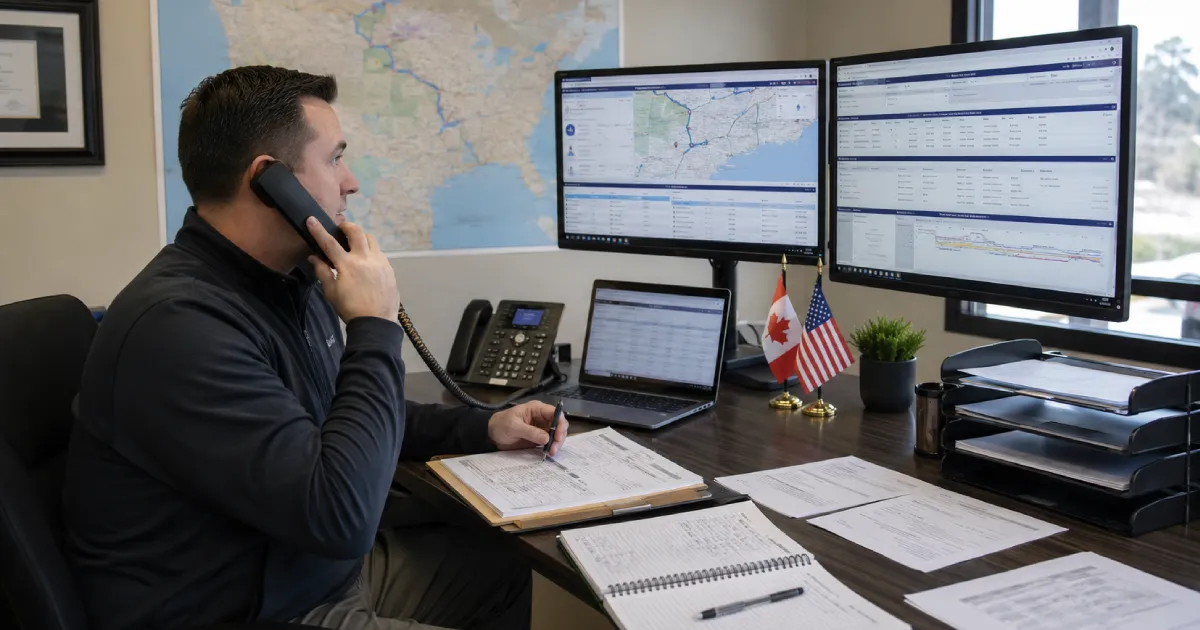
Freight brokerage involves arranging transportation between companies that need goods moved and motor carriers with available capacity. The broker does not haul the cargo but coordinates the transaction from the initial rate request through delivery and payment.
Common freight broker responsibilities include:
Effective collaboration with shippers and carriers depends on accurate load details, fast responses, and clear terms. A missing pickup number can lead to detention charges, a missed appointment, or a rate dispute.
A dispatcher usually works for or on behalf of a trucking company and helps manage its trucks. A freight broker connects a shipper with an available carrier and coordinates the transportation arrangement between them.
Anyone interested in learning about both truck dispatching and freight brokerage can explore MAZE Consultancy & Training’s truck dispatcher training course. The program covers logistics software, cross-border operations, rate negotiation, and shipment coordination.
A freight forwarder may take broader responsibility for moving or consolidating cargo. A freight broker normally arranges transportation between the shipper and carrier, although contracts differ.
New brokers can learn these workflows through training before handling live shipments. A well-structured course should cover documentation, brokerage software, rate negotiation, carrier screening, and freight operations in both Canada and the U.S.
Starting a freight brokerage in Canada involves several steps beyond company registration. The owner must determine the legal requirements, develop reliable operating procedures, and establish controls for managing each shipment.
A broker needs to understand truckload, less-than-truckload, refrigerated, flatbed, and other types of freight. Training should cover equipment types, rate negotiation, bills of lading, rate confirmations, carrier selection, tracking, customs procedures, and claims handling. A focused course can show how these tasks fit together before a new broker begins handling live shipments.
Common options include a sole proprietorship, a partnership, or a corporation. The chosen structure determines whether the owner must register a business name, incorporate federally or provincially, and open any required Canada Revenue Agency program accounts.
Requirements depend on the province, office location, freight lanes, contracts, and operating model. A Canadian broker arranging interstate shipments in the U.S. may also need FMCSA operating authority, financial security, and a BOC-3 filing that designates process agents.
Written agreements should define rates, payment terms, liability, documentation requirements, service standards, claims procedures, cancellation terms, and accessorial charges. Clear terms reduce confusion when detention, cargo damage, missed appointments, or payment issues lead to a dispute.
Before tendering a load to a carrier, the broker must verify operating authority, insurance, safety record, identity, contact details, and banking information. Fraud controls include call-back verification procedures, email domain checks, and restrictions on last-minute changes to payment details.
A repeatable process should:
This workflow provides a consistent sequence from the initial shipment request through payment to the carrier.
Freight broker startup costs in Canada vary considerably. The amount depends on whether the business uses a home office, hires staff, buys software, uses factoring, markets its services to customers, or arranges U.S. loads.
| Cost category | What it includes |
|---|---|
| Business formation | Registration, incorporation, accounting, and legal review |
| Insurance | Errors and omissions, general liability, cyber, and contingent cargo coverage |
| Technology | TMS, load boards, phone, email, accounting, and document storage |
| Contracts | Legal review of shipper and carrier agreements |
| Sales | Website, directories, prospecting tools, and advertising |
| Working capital | Carrier payments, payroll, claims, and operating expenses |
| U.S. operating authority | FMCSA application fee, bond or trust costs, and BOC-3 filing |
Insurance requirements vary by province, shipment type, contract terms, and the level of responsibility the broker assumes. The brokerage should select coverage based on its shipment types, contracts, and financial exposure rather than rely on a generic insurance package.
Starting a freight brokerage also requires cash-flow planning. A customer may pay in 30 days while the carrier expects payment sooner. Factoring can improve cash flow, but the fees reduce the brokerage’s margin.
GST/HST planning is also part of the initial setup. The small-supplier threshold is generally $30,000 in worldwide taxable supplies, subject to the applicable calendar-quarter tests. Registration is generally mandatory once that threshold is exceeded. Training can explain the brokerage workflow, but registration, tax, contract, and insurance decisions require separate attention.
A successful brokerage depends on repeatable systems, not phone calls and memory alone. Freight broker software helps a broker organize quotes, carrier records, documents, shipment updates, invoicing, and customer communication in one place. Freight load boards serve a different purpose. They help brokers find available carriers and post loads that need coverage.
A basic technology stack includes:
This technology stack gives the business a clear record of each load. It also shows which carrier accepted the shipment, what rate was approved, and when delivery was completed.
Reliable shipper and carrier relationships still depend on clear communication. Sending a driver to a warehouse without the correct pickup number or appointment details can disrupt the entire shipment. That mistake can result in detention charges for the carrier, a missed delivery window, and additional charges that the broker must resolve. Accurate instructions, fair payment terms, rate transparency, and consistent follow-up reduce these disputes.
Freight broker income in Canada varies widely from one operation to another. Income depends on load volume, margins, customer retention, carrier access, claims, unpaid invoices, operating costs, and sales performance.
Gross brokerage revenue − carrier costs − operating expenses = approximate operating profit
Training can help a new broker understand the workflow before handling live shipments. It does not replace business registration, insurance, contracts, licensing, or regulatory compliance. A useful course shows how documents, software, and operating procedures support decisions made on actual shipments.
MAZE Consultancy & Training offers its Freight Broker Training Course in live online and classroom formats. The course covers load boards, transportation management systems, brokerage tools, and software used in cross-border freight operations.
Learning areas include:
Anyone comparing freight broker training programs in Canada can evaluate them based on instructor access, software exposure, hands-on shipment scenarios, and coverage of freight brokerage practices in Canada and the U.S. Those details provide a clearer measure of course quality than broad promises about income or quick success.
Brokers planning to arrange U.S. interstate shipments should confirm the operating authority, financial security, and process-agent requirements that apply under FMCSA rules before accepting loads.

Becoming a freight broker starts with learning how loads are priced, matched, documented, tracked, and paid. A new operator must also establish contracts, carrier-screening procedures, insurance coverage, software systems, and enough working capital to cover the gap between paying carriers and receiving customer payments. Anyone considering a career as a freight broker should also understand that Canada and the U.S. use different registration systems. A working knowledge of the logistics industry is valuable before accepting live shipments or entering cross-border agreements.
U.S. freight broker requirements include obtaining operating authority from the Federal Motor Carrier Safety Administration, providing a $75,000 BMC-84 surety bond or BMC-85 trust fund agreement, submitting Form BOC-3, and paying the federal application fee. A freight broker license is not issued through the same process in Canada. Becoming a licensed freight broker for U.S. interstate activity also requires business registration, tax setup, contracts, reliable records, and continued compliance with financial security requirements.
Freight broker training is worthwhile when it teaches the full operating workflow rather than focusing only on how to search load boards. A useful training program covers rate negotiation, carrier screening, shipment documentation, claims handling, invoicing, fraud controls, and transportation management software. It also explains how Canadian and U.S. requirements differ. Training does not replace registration, contracts, insurance, or legal review, but it helps reduce avoidable errors for people entering the freight industry.
An effective online course for freight brokers and freight agents usually covers load selection, rate confirmations, bills of lading, carrier communication, shipment tracking, invoicing, and border-crossing workflows. Freight agent training may also include transportation management systems, load boards, customer relationship management tools, and fraud-prevention checks. Online training is most useful when learners can ask instructors questions and work through realistic shipment scenarios instead of only watching recorded lessons. A well-designed course clearly distinguishes the responsibilities of a brokerage owner from those of a freight agent.
Before launching, determine the brokerage setup requirements based on the business location, freight lanes, company structure, and whether the company will arrange U.S. interstate transportation. Prepare shipper and carrier agreements, arrange insurance coverage, set up tax accounts and software, and establish payment procedures and fraud controls. Freight broker responsibilities continue after a load is booked, so the business also needs systems for tracking, delivery confirmation, invoicing, claims, and recordkeeping. Cash-flow planning is essential because carriers may expect payment before customers pay their invoices.
A broker owns or operates the brokerage, maintains the required authority where applicable, signs customer and carrier agreements, manages compliance, and assumes the financial risk of the company. A freight agent typically works under an established brokerage and focuses on sales, load coordination, or customer service without holding separate broker authority. The exact relationship depends on the contract. Before accepting work, agents must clarify who controls billing, carrier approval, claims, records, and customer ownership.
There is no single reliable figure because brokers may be employees, commissioned salespeople, agents, or business owners. Income depends on shipment volume, margin per load, customer retention, carrier access, unpaid invoices, claims, and operating expenses. Freight agents may receive a salary, commissions, or a combination of both, depending on the company. Owners should evaluate operating profit rather than gross revenue. Subtracting carrier payments and business expenses from brokerage revenue provides a more useful picture of actual earnings.