The Canadian trucking industry relies on skilled dispatchers to coordinate shipments, communicate with drivers, manage delivery schedules, and keep freight moving across Canada and the United States. The best way to become a truck dispatcher in Canada is to learn trucking operations, complete practical training using industry software, develop communication and negotiation skills, and gain experience with realistic dispatching scenarios.
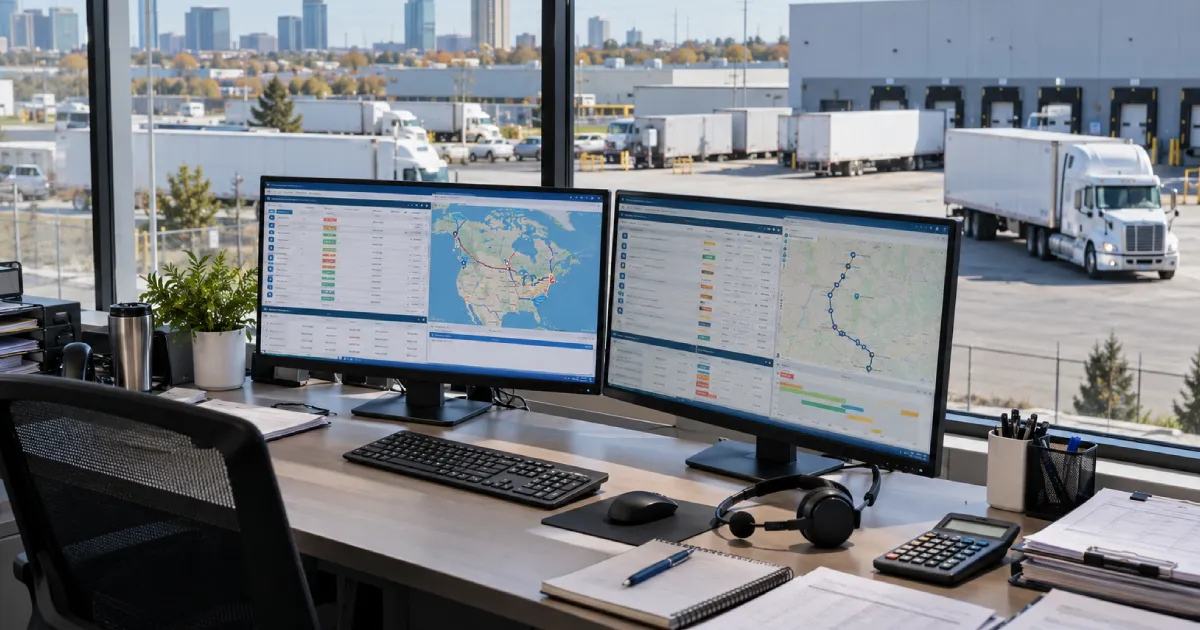
Truck dispatchers find suitable freight, coordinate with brokers and drivers, negotiate rates within company guidelines, plan pickups and deliveries, monitor driver availability, prepare shipping documents, track shipments, and resolve delays. Strong dispatchers understand both transportation operations and freight economics.
Truck dispatching is not generally a regulated occupation requiring an individual government-issued dispatcher licence in Canada. Employers may provide on-the-job training, but a specialized course can help beginners develop practical knowledge. Operating as a freight broker is different from dispatching for a carrier and may involve additional requirements, especially for U.S. freight.
Look for instructors with transportation experience, supervised load-board exercises, freight-rate calculations, Canadian and U.S. regulations, shipment documentation, and realistic scheduling scenarios. MAZE Consultancy offers instructor-led Truck Dispatcher and Freight Broker Specialist Training through live online and classroom formats in Mississauga, Ontario.
Familiarity with Loadlink, DAT, and Truckstop can help with freight searches and load matching. Transportation management systems (TMS) help organize assignments, documents, and updates. The goal is to understand the workflow, not merely memorize menus.
Dispatchers coordinating Canada–U.S. freight should understand hours-of-service rules, electronic logging devices, carrier authorities, customs documentation coordination, equipment availability, and basic safety obligations. They should know when to seek assistance from qualified compliance or customs professionals.
Look for entry-level dispatch assistant, transportation coordinator, and logistics operations roles. Practice communication, rate analysis, delay management, and documentation. Before launching an independent dispatch service, understand the legal boundary between carrier dispatching and freight brokerage.
Ask whether the course offers real software practice, live instructor feedback, Canadian and U.S. coverage, a completion certificate, and post-course support. Practical training quality is more important than promotional claims.
Yes; many beginners learn through training and entry-level work.
Introductory courses may take days or weeks, while workplace proficiency takes more practice.
Some employers and independent operations allow remote dispatching.
A general government-issued dispatcher certificate is not normally required.
Start Training with MAZE Consultancy
Explore MAZE Consultancy’s Truck Dispatcher and Freight Broker Specialist Training
Phone: +1 (905) 826-2919 | Toll-Free: +1 (888) 315-6293
Classroom location: Mississauga, Ontario, Canada