A dispatcher rarely gets the luxury of handling one decision at a time. A driver is late. A better-paying load appears. Then a customer changes the delivery window while the paperwork, route, and hours-of-service limits still demand attention.
Good training prepares students to handle that pressure. It introduces the systems, documents, regulations, and communication skills used to coordinate trucking operations. Anyone researching how to choose a truck dispatcher training course needs to look beyond polished descriptions. The most useful programs combine relevant content, software access, qualified instructors, compliance coverage, and career preparation. Knowing industry terminology alone does not prepare someone to manage a shipment in transit.
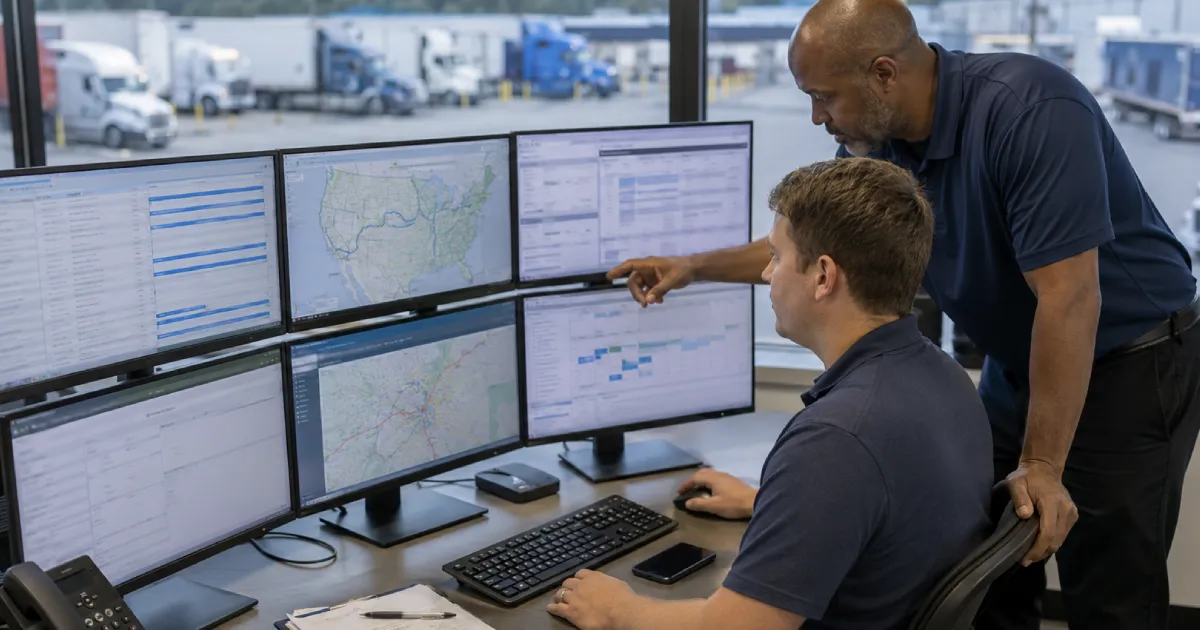
The right program depends on the role the student plans to pursue and the type of transportation work involved.
Beginners need a solid foundation for working with carriers, drivers, loads, and daily dispatch workflows. Experienced dispatchers typically look for deeper instruction in rate negotiation, load selection, scheduling, and driver communication. Entrepreneurs require a broader understanding of owner-operator coordination, freight brokerage operations, and the systems involved in building a transportation business.
A well-matched program supports one or more of these outcomes:
Beginner truck dispatcher training explains industry terminology without assuming prior experience. Students receive a clear introduction to truck and trailer types, shipment categories, dispatcher responsibilities, carrier setup, and the full load cycle from load selection and booking through delivery, invoicing, and recordkeeping.
Experienced participants need less time on basic definitions and more instruction in decision-making. Their priorities often include rate negotiation, safety compliance, cross-border documentation, logistics software, customer communication, and business management. Freight dispatcher training for cross-border operations also requires different content than a program focused on local fleet scheduling.
The most comprehensive curriculum is not necessarily the best. Some programs list dozens of topics but give little time to the tasks employers or clients expect dispatchers to perform. Before comparing providers, write down three outcomes the training must deliver. That short list will expose irrelevant content quickly and help ensure the selected program aligns with your career plans.
A well-designed curriculum identifies the specific tasks students will learn to perform. Broad claims such as “complete logistics education” provide little insight into the actual instruction. The program outline needs to show how students will learn to manage the dispatch process from load selection and booking through driver coordination, shipment tracking, delivery, invoicing, and final recordkeeping.
A comprehensive dispatcher training program covers the full dispatch cycle, not isolated definitions. Students learn how to structure the daily workflow, select and match loads, schedule drivers, manage routes and orders, calculate costs, negotiate rates, track shipments, handle carrier setup, communicate with customers and drivers, and maintain accurate invoices and records. The program also explains freight broker responsibilities so participants understand where dispatching ends and brokerage activity begins.
Effective simulations place students in situations where every decision affects the next step. A driver reaches the legal hours-of-service limit before delivery, a shipper moves the pickup window after the route has been planned, or a high-paying load leaves the truck stranded in a weak outbound market. Students must weigh revenue, driver availability, service commitments, and route economics before acting. This type of training prepares dispatchers to protect carrier schedules, profit margins, and customer relationships.
A transportation management system, or TMS, is software used to create loads, manage routes, update shipment status, store documents, and prepare invoices. Direct access to load boards and dispatch software helps students understand how a real dispatch operation works.
Confirm which platforms students will use and whether the software exercises are led by an instructor. Relevant systems include load boards, brokerage software, transportation management systems, and electronic manifest platforms used for cross-border freight. At MAZE Consultancy & Training, our truck dispatcher training combines live instruction, software access, feedback during exercises, and guidance for career development or business setup.
| Course Area | What the Program Should Cover | Questions to Ask Before Enrolling |
|---|---|---|
| Questions to Ask Before Enrolling | Load selection, booking, driver scheduling, route planning, shipment tracking, delivery, invoicing, and recordkeeping | Does the course cover the complete dispatch cycle through realistic exercises? |
| Rate negotiation | Freight rates, operating costs, route economics, profit margins, and broker communication | Will students practice negotiating rates in realistic scenarios? |
| Load boards and software | Load boards, TMS platforms, brokerage software, electronic manifests, and document management | Which platforms are included, and will students use them during class? |
| Driver coordination | Hours-of-service availability, pickup and delivery scheduling, route changes, and driver communication | Will students practice resolving delays, scheduling conflicts, and service problems? |
| U.S. compliance | DOT and FMCSA requirements, hours-of-service rules, ELD records, equipment limits, and weight regulations | Which U.S. regulations and agencies are covered? |
| Canadian compliance | Provincial requirements, carrier safety records, hours-of-service rules, and weight limits | Does the curriculum explain how Canadian requirements differ from U.S. rules? |
| Cross-border freight | ACE, ACI, electronic manifests, customs records, bonded freight, FAST shipments, and insurance documents | Does the course include hands-on cross-border documentation exercises? |
| Instructor access | Live explanations, individual feedback, software guidance, and scenario review | How large are the classes, and how much direct access will students have to the instructor? |
| Career and business support | Employment guidance, mentorship, carrier setup, and logistics business planning | What support remains available after the course ends? |
| Course certificate | Attendance requirements, assignments, assessments, and certificate terms | What does the certificate confirm, and is it a completion certificate or an accredited credential? |
Neither format is automatically superior. The right choice depends on the student’s schedule, preferred learning environment, and access to the instructor. Both online and classroom training must provide enough time with dispatch software, opportunities to ask questions, and direct feedback during exercises. Without those elements, the delivery format makes little difference.
A live online truck dispatcher course works well for students who want the flexibility to learn from any location without losing direct instructor interaction. Before enrolling, confirm whether the sessions are live or prerecorded. Also check whether participants work directly with logistics systems during class, can review session recordings afterward, and have opportunities to ask questions in real time.
Online truck dispatch training also requires stable internet, a suitable computer, and a quiet place to participate. Small classes give the instructor time to watch how each student handles a load, route, or customer problem.
Classroom instruction suits students who prefer structured attendance, face-to-face explanations, and immediate help. It also avoids technical problems that interrupt online lessons. The trade-offs are reduced scheduling flexibility and the need to travel to a fixed location.
Before enrolling, compare class size, software access, session recordings, technical requirements, feedback, course format, and instructor availability. The better option supports the student’s learning style, career direction, and expected role in the industry.
A dispatcher working in North America cannot treat Canadian and U.S. trucking regulations as interchangeable. The provider must identify the jurisdictions, agencies, and electronic systems covered. Vague references to “North American compliance” do not prepare a dispatcher for cross-border operations.
Truck dispatcher training should explain U.S. Department of Transportation requirements, Federal Motor Carrier Safety Administration rules, Canadian provincial requirements, carrier safety records, equipment limits, and weight rules. Hours-of-service rules govern driving and rest periods. An electronic logging device records a driver’s activity and supports compliance documentation.
A trained dispatcher must understand how available driving time affects pickup and delivery commitments. Booking a truck without checking legal hours can cause delays, additional costs, and missed service commitments. Freight dispatcher training must connect each rule to daily dispatch decisions instead of treating compliance as a separate industry topic.
Cross-border documentation includes shipment records, customs clearance information, carrier and insurance documents, border-crossing records, and electronic manifests. The Automated Commercial Environment, or ACE, is used for U.S.-bound reporting. Advance Commercial Information, or ACI, is used to report freight entering Canada.
Relevant instruction also covers bonded freight movements and shipments processed through the Free and Secure Trade, or FAST, program. Compliance training explains how these processes work and how dispatchers prepare accurate records for cross-border logistics operations. Customs agencies and other government authorities have final authority over approvals, licenses, and certifications.
Even a detailed curriculum falls short when the instructor cannot connect the material to real-world trucking operations. Look for instructors with current experience in dispatching, freight brokerage, transportation consulting, or carrier management, along with a solid understanding of Canadian and U.S. requirements.
Students should check how much access they will have to the instructor. Large classes often limit questions, individual feedback, and software review. In a smaller group, the instructor has time to examine how each student selects a load, negotiates a rate, or responds when a driver cannot meet the schedule.
Evaluate the support available after the final class, including mentorship, employment guidance, and help with business setup. That support becomes especially valuable when a new dispatcher begins applying what they learned in a real-world logistics setting. A strong program continues to provide direction as students move from training into employment or business ownership.
A certificate of completion confirms that a student completed the provider’s course requirements. It is not a government license or independently accredited professional certification. Ask what the certificate represents and whether attendance, assignments, or a final assessment are required. Prospective students should understand that distinction.
Our team at MAZE Consultancy & Training includes logistics professionals who provide instruction, mentorship, employment support, and guidance for students planning to start logistics or trucking businesses. We also work with educational institutions and are a LoadLink-authorized training center.
The right truck dispatcher training program prepares students for the role they plan to pursue and the responsibilities that come with it. Before enrolling, confirm that the program provides:
Anyone researching how to choose a truck dispatcher training course should request the current syllabus, confirm which software platforms are included, and ask when the curriculum was last updated.
At MAZE Consultancy & Training, we offer a combined Truck Dispatcher and Freight Broker Specialist program for beginners, industry professionals, and entrepreneurs. The program covers dispatching, freight brokerage, logistics software, compliance, cross-border processes, rate negotiation, and business management. Prospective students can review the course page or contact our team to confirm current fees, dates, formats, and locations before enrolling.

Lectures and terminology alone do not prepare students for the work. Effective dispatcher and freight broker training combines hands-on simulations, guided software exercises, document review, and realistic negotiation scenarios. Instructor experience deserves equal attention because trainers must connect each concept to real-world transportation operations. A well-designed program also includes individual feedback, post-training assistance, career guidance, and business startup support for participants entering dispatcher roles, independent dispatching, freight brokerage, or business ownership.
Truck dispatching involves coordinating loads, drivers, routes, delivery windows, documents, and customer communication. The work sits at the center of daily carrier operations, so small mistakes can disrupt driver schedules, service commitments, and operating costs. Effective truck dispatcher training courses explain both the workflow and the decisions behind it. Look for a curriculum that clearly covers dispatch operations, including load selection, scheduling, tracking, invoicing, and recordkeeping.
Becoming a truck dispatcher starts with learning transportation terminology, load cycles, scheduling, rate negotiation, compliance, and logistics software. A truck dispatcher course for beginners builds the skills required to understand carrier operations before handling live freight. The career path may then lead to senior dispatcher positions, freight brokerage, safety and compliance roles, operations management, or business ownership. For professionals who work well under pressure and make sound decisions quickly, dispatching offers opportunities for advancement and specialization.
Freight broker training covers the commercial and operational side of arranging transportation between shippers and carriers. A specialist course usually explains carrier sourcing, rate negotiation, contracts, documentation, invoicing, risk management, and customer service. It also helps students understand how freight brokers fit into the wider supply chain. Effective training separates brokerage duties from dispatch responsibilities and shows how both roles interact within the logistics industry without treating them as interchangeable.
Dispatching and freight brokerage are closely connected because every load requires coordination among the shipper, carrier, driver, and customer. Dispatchers manage the movement of trucks and freight, while brokerage teams help secure freight and negotiate terms. When these functions work together, trucking companies gain better visibility into schedules, rates, equipment use, and profitability. Training needs to explain where responsibilities overlap, where they remain separate, and how information moves through the logistics process from booking through final delivery.