Canada’s freight network depends on precise coordination between carriers, brokers, shippers, dispatchers, and drivers. When that coordination breaks down, even a minor error can result in costly delays. A missing document may hold up a shipment at the border, while an incorrect pickup time can leave a driver waiting for hours.
Logistics training prepares learners for these everyday pressures. A useful logistics course goes beyond terminology and explains how transportation operations, documentation, software, communication, and compliance connect. For anyone considering a logistics career, that working knowledge is a sensible place to start.
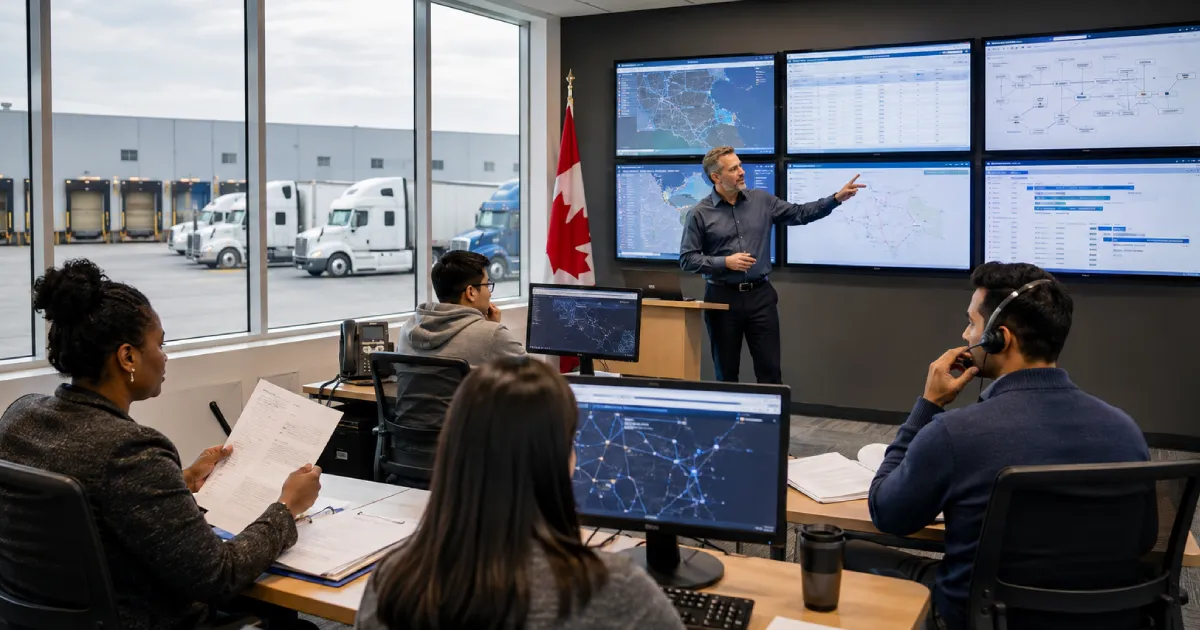
Logistics training teaches participants how to coordinate freight movement, manage transportation data, prepare shipping documents, use industry software, and follow operational and compliance requirements.
Logistics training programs vary considerably in scope. Dispatcher training focuses on load booking, route planning, delivery schedules, driver communication, and shipment tracking. Freight broker training covers carrier selection, customer relationships, rate negotiation, and brokerage operations. Comprehensive programs also address procurement, inventory control, customs procedures, workplace safety, and supply chain security.
Most courses address four general areas:
There is no universal logistics course in Canada. A short professional program designed for aspiring dispatchers bears little resemblance to a multi-year college program covering warehousing, procurement, inventory, distribution, and transportation management.
So, which option makes sense? It depends on the work a learner plans to pursue. Course descriptions should be reviewed carefully. Current documents, relevant logistics software, and realistic exercises are particularly valuable. Theory provides context, but real-world freight operations demand judgment, speed, and attention to detail.
Canadian learners can choose from programs covering freight operations, brokerage, regulatory compliance, and cross-border transportation. These areas play distinct but connected roles within the broader supply chain in Canada. Each type of course prepares participants for a different area of the logistics industry.
Truck dispatcher training teaches learners to coordinate trucks, drivers, freight, and delivery schedules. Participants practice selecting loads, planning routes, monitoring shipments, communicating with drivers, and using transportation management systems.
Documentation is equally important. Bills of lading, rate confirmations, driver logs, and related records accompany freight throughout its journey. Understanding these documents prepares graduates for entry-level dispatch positions or independent work with owner-operators and small fleets.
Compliance courses cover the rules and documentation required for lawful freight movement. Core topics include Hours of Service limits, driver logbooks, customs procedures, supply chain security, and Canada–U.S. transportation requirements. Complete and accurate documentation helps prevent border delays and keeps freight moving efficiently.
At MAZE Consultancy & Training, we offer live online and in-person programs in dispatching, freight brokerage, compliance, and freight management. Our hands-on logistics training incorporates industry software, transportation documents, realistic operational scenarios, instructor feedback, and individual guidance.
Before enrolling, learners should compare the curriculum, schedule, delivery format, and fees. The best option is the one that reflects the work they actually intend to do.
Dispatchers and brokers make different decisions about the same shipment. A dispatcher stays close to the truck, driver, and schedule. The broker begins with the shipper’s request, then finds a carrier capable of transporting the load at an agreed price. That distinction shapes the work and the training behind it.
| Comparison point | Truck dispatcher training | Freight broker training |
|---|---|---|
| Main responsibility | Coordinating trucks, drivers, and loads | Arranging transportation between shippers and carriers |
| Typical tasks | Load booking, driver communication, tracking, and scheduling | Carrier sourcing, rate negotiation, customer management, and planning |
| Main relationships | Drivers, fleet managers, brokers, and customers | Shippers, carriers, dispatchers, and customers |
| Business focus | Fleet or independent dispatch operations | Brokerage operations and client development |
| Shared skills | Documents, communication, logistics software, and freight coordination | Documents, communication, logistics software, and freight coordination |
Combined truck dispatcher and freight broker training connects both sides of freight operations. Learners follow a shipment from the initial customer request through carrier selection, dispatch, delivery, and final recordkeeping. Along the way, they see how individual decisions affect procurement deadlines, inventory plans, and the broader supply chain.
Combined training is particularly valuable for entrepreneurs and professionals whose responsibilities span operations and sales. It broadens their career options while helping them understand the distinct responsibilities of dispatchers and freight brokers.
Which Training Path Is Right for You?
Picture a load moving from Mississauga to Detroit. The broker confirms the freight details and equipment requirements, negotiates the freight rate, and then selects a carrier. Meanwhile, the dispatcher reviews the driver’s available hours, schedules the pickup, and provides the driver with the necessary shipping documents.
Congestion later threatens the delivery window. Logistics coordination now requires quick updates, a revised arrival time, and an accurate record of the delay.
A logistics certificate program can help learners develop practical skills in freight coordination, documentation, scheduling, customer communication, inventory control, and industry software. Learners gain experience with shipment records, delivery changes, carrier updates, and other situations that arise in freight operations.
Effective logistics training develops capabilities such as:
These activities influence procurement schedules, inventory levels, and subsequent stages of the distribution process. Freight management calls for judgment, not merely fast data entry.
Transportation management systems bring loads, carrier details, documents, schedules, and updates into one place. Dispatchers and brokers can use them to maintain an organized view of active freight operations.
Watching a software demonstration is rarely enough. In a well-designed logistics course, learners enter loads, attach documents, revise delivery times, and report exceptions themselves. Hands-on practice reveals mistakes that passive instruction often misses.
Online logistics training can still include live exercises, realistic documents, and instructor feedback. At MAZE Consultancy & Training, we offer online and in-person formats built around logistics software and real-world operating scenarios. Our program supports professional development and logistics career planning, including pathways into freight forwarding, inventory management, procurement, and other transportation roles.

Completing logistics training does not guarantee employment. Still, it can prepare learners for entry-level work and help existing professionals broaden their responsibilities. The value comes from being able to handle freight operations, documentation, software, and customer communication with greater confidence.
Possible career paths include truck dispatching, operating an independent dispatch service, freight brokerage, logistics coordination, shipment tracking, safety and compliance, and freight forwarding.
These career paths overlap, but the work is not identical. Dispatchers coordinate loads, drivers, and schedules for carriers or fleets. Brokers arrange transportation between shippers and carriers, negotiate freight rates, and manage client relationships. Freight forwarding covers a broader range of shipping activities. A freight forwarder may arrange road, rail, air, or ocean transportation and coordinate international documentation, customs procedures, and other global trade requirements.
A logistics coordinator often works across several departments. They might update shipment status information, alert procurement teams about a delay, and help inventory staff adjust receiving plans. This broader experience can lead to roles in transportation management, freight management, operations management, or supply chain support.
Additional training helps experienced professionals advance into compliance, supervision, or account management. Entrepreneurs need expertise in logistics software, client acquisition, service agreements, shipping documentation, and business setup. Employers and clients value professionals who combine these technical skills with sound judgment, effective communication, and proven results.
A logistics course should be evaluated based on the practical experience it provides, not its promotional claims. Compare the curriculum with your career goals or intended business model.
Check whether the training includes:
The right program depends on the intended career path. Aspiring dispatchers benefit from direct instruction in driver communication and schedule management, while future brokers need more extensive training in freight pricing, carrier sourcing, and customer management. Broader logistics roles also demand knowledge of procurement, inventory, and supply chain operations. Effective online logistics training combines instruction with hands-on exercises rather than relying solely on recorded videos.
For learners seeking combined instruction, our Truck Dispatcher and Freight Broker Training Course covers dispatch operations, brokerage, shipping documentation, freight rate negotiation, customs-related processes, software, and business setup. At MAZE Consultancy & Training, we offer live online and in-person formats with instructor guidance. Students should confirm current schedules, locations, fees, and program duration before enrolling.
Explore our hands-on logistics training programs to compare course topics and find the format that best matches your career or business plans.

Supply chain management coordinates the movement of goods, information, and resources from sourcing to final delivery. Reliable operations depend on accurate planning across procurement, inventory, transportation, and distribution. Logistics training covers shipment scheduling, document control, carrier communication, and exception handling. Learners also see how a delay or inaccurate record in one part of the supply chain can increase costs, disrupt inventory planning, and put customer commitments at risk.
Logistics and supply chain professionals handle connected but distinct responsibilities. Logistics management covers the movement, storage, and delivery of goods, while supply chain management extends to sourcing, production planning, supplier relationships, and demand forecasting. Training often combines transportation, inventory control, and operational planning. Course selection should reflect the intended career path. Dispatchers require hands-on freight coordination skills, while planning and procurement professionals need a broader understanding of how operational decisions affect costs, inventory, suppliers, and business performance.
Education in logistics and supply chain management typically covers transportation, procurement, inventory, warehousing, documentation, compliance, and customer communication. Effective programs develop foundational knowledge and practical skills that apply directly to real-world freight operations. Learners gain practical knowledge by preparing documents, entering loads, revising schedules, and resolving realistic delivery problems. They also work with logistics technologies, such as transportation management systems. Anyone pursuing logistics training should choose a course that combines direct instruction with exercises, feedback, and current industry tools.
International trade introduces customs procedures, additional documentation, multimodal transportation, and country-specific requirements. These factors directly affect routing, delivery schedules, inventory planning, and operational risk. Cross-border shipments also require close coordination among carriers, brokers, importers, exporters, and customs professionals. Supply chain managers plan for border delays and transportation risks, while procurement and supply chain management teams account for longer lead times and sourcing constraints when purchasing goods and maintaining inventory.
A useful logistics program reflects the work a learner plans to perform. Future dispatchers need practice in load booking, route planning, driver communication, documentation, and industry software. Those preparing for coordinator roles also benefit from instruction in inventory, procurement, customer service, and reporting. Course descriptions should explain how these skills are applied in realistic situations. Part-time study can work well for working professionals when it includes instructor feedback and enough hands-on practice to prepare them for day-to-day responsibilities.