Importers do not always want to pay duties as soon as merchandise enters Canada or the U.S., especially when the final market or delivery date is still uncertain. A bonded warehouse is a customs-authorized facility where imported goods can be stored without immediate payment of applicable duties and taxes. This form of bonded warehousing supports seasonal inventory management, re-exports, and delayed distribution. It also gives companies greater control over the storage of imported goods while they remain under customs supervision. For many businesses, duty and tax deferral preserves cash flow until the goods are released or shipped elsewhere.
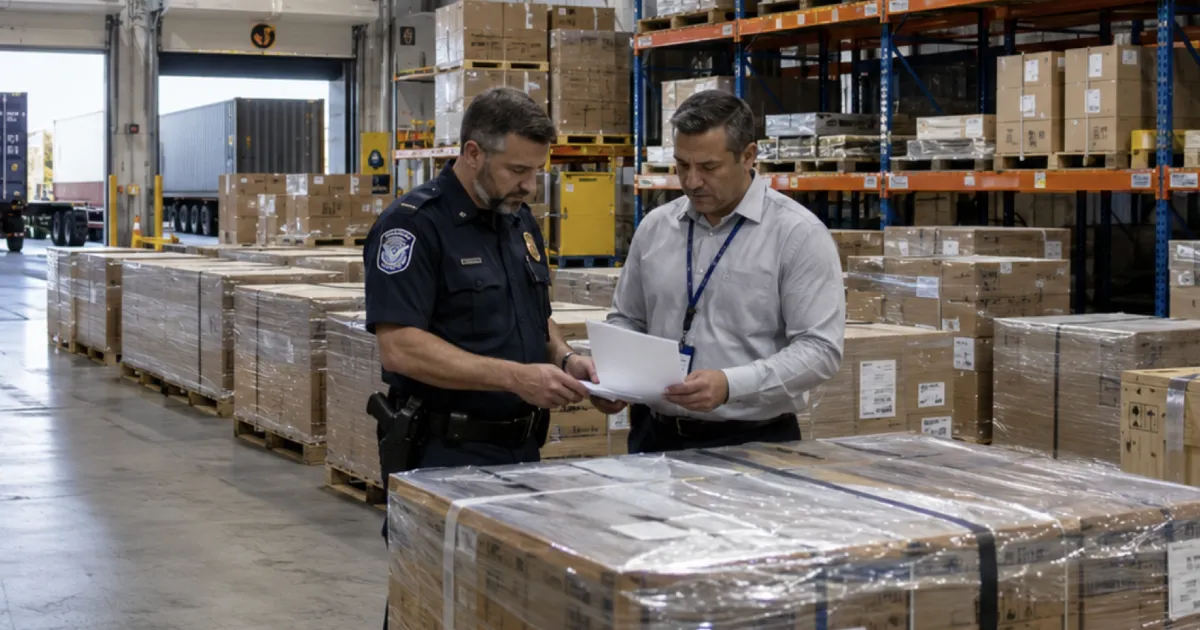
A customs bonded warehouse is an approved facility used to store imported merchandise that has entered a country but has not yet been released into domestic commerce. The warehouse operator physically handles the inventory, but the goods remain under customs control and must be handled in accordance with the conditions of the facility’s authorization.
Bonded goods are imported products that companies store under government control before applicable duties and taxes have been paid and other import requirements have been satisfied. Common examples include:
A bonded facility is not simply a secure commercial building where companies store products. It operates under government authorization and must maintain specific inventory records, access controls, security procedures, and reporting systems. These controls allow the relevant authority to identify which goods entered the facility, where each shipment or unit is located, and how each item eventually leaves the facility.
Requirements differ between Canada and the U.S. The facility type, eligible goods, permitted activities, and reporting process depend on the applicable customs program and the type of authorization.
The exact process varies by country and facility type, but the main stages are similar.
A shipment arrives at a port, airport, rail terminal, or land border. Customs declarations and transportation documents identify the importer, carrier, shipment value, country of origin, product type, and intended import procedure.
Instead of being released immediately into domestic commerce, the goods are moved to an authorized warehouse. The operator can store the shipment during the approved storage period while duties and taxes remain deferred under the applicable rules.
The operator records arrivals, transfers, removals, quantity adjustments, and other approved activities. The inventory system must allow customs officials to trace each movement and confirm whether the goods remain bonded, have been released, or have been re-exported.
Depending on the authorization, permitted value-added warehousing activities may include:
Not every activity is automatically allowed. The warehouse operator must confirm which activities are authorized before work begins.
There are two main outcomes. If the goods are released into the domestic market, import duties and taxes become payable before release. If the goods are re-exported, they leave Canada or the U.S. without entering the domestic market, provided all required customs procedures are completed.
Truck dispatchers coordinating bonded and cross-border shipments must understand how customs status affects documentation, pickup timing, routing, and release. MAZE Consultancy & Training’s truck dispatcher training course covers bonded shipments, border-crossing procedures, customs clearance, eManifests, and recordkeeping.
A public bonded warehouse and a private bonded warehouse serve different operational needs. The appropriate type depends on import volume, available capital, inventory controls, and how often a company stores goods under customs supervision.
A public bonded warehouse provides authorized storage services to multiple importers from a single licensed facility. The warehouse operator manages physical security, inventory controls, customs records, and approved handling procedures. Each importer remains responsible for accurate shipment information and customs documentation.
This model works well for companies without their own bonded facility, importers with irregular shipment volumes, and businesses entering a new market. It also fits organizations that require bonded storage for a limited period but cannot justify the cost of operating a private warehouse.
Using an established public facility reduces capital requirements, staffing needs, and the administrative burden associated with maintaining an in-house operation. It also allows inventory to remain close to the intended market while the importer confirms release dates, final destinations, and distribution plans.
A private facility is generally operated for the operator’s own eligible goods. It may suit companies with steady shipment volumes, manufacturers using imported components, large distributors, or organizations seeking greater inventory control.
Private bonded warehousing can be integrated directly into receiving, order preparation, and distribution operations. However, the operator assumes responsibility for customs compliance, physical security, inventory tracking, and facility records.
Terminology, eligibility, and licensing differ between Canada and the U.S. A warehouse arrangement approved in Canada may not meet U.S. customs requirements, so each jurisdiction must be reviewed separately.
One of the main financial benefits of bonded warehousing is the ability to delay duty payments until goods enter the domestic market. An importer avoids tying up capital in duties on inventory still awaiting sale, transfer, or re-export. With high-value or seasonal shipments, the effect on cash flow is often substantial.
Bonded storage also gives companies greater control over the final destination of their inventory. Goods remain near a target market while the importer confirms demand, determines the final destination, or arranges further transportation. Inventory intended for re-export can leave the country without first entering domestic circulation, provided the correct customs procedures are followed.
Authorized warehouse activities often include inspection, sorting, labeling, repacking, and consolidation. These services prepare inventory for different customers or markets without requiring the entire shipment to enter domestic commerce. The exact activities permitted depend on the facility’s authorization.
These advantages come with stricter operational controls. A bonded warehouse operator must maintain complete and accurate inventory records, restrict access to controlled areas, reconcile discrepancies, and document every receipt, transfer, adjustment, and release. Customs bonds, inspections, security systems, and staff training also increase operating costs.
Poor recordkeeping creates immediate risks. Customs authorities may hold shipments, order or conduct physical inspections, assess penalties, or review whether the facility continues to meet the conditions of its authorization.
Consider a company bringing a full container of goods into Canada before final customer orders have been confirmed. Part of the shipment enters the Canadian market, another part is shipped to the U.S., and the remainder is re-exported. Duties apply only to the inventory released in Canada. The arrangement preserves cash flow, but the operator must account for every unit from arrival to final removal.
Bonded and non-bonded warehouses follow different customs, storage, and inventory control requirements.
A non-bonded warehouse receives goods after customs clearance is complete. Import duties and taxes have already been paid, and the inventory is available for domestic order fulfillment, distribution, and sale without the controls associated with bonded status.
A bonded warehouse operates under customs authorization. Imported goods remain under customs control while duties and taxes are deferred. The warehouse operator must maintain records showing where each shipment is stored, who handled it, which activities were performed, and whether the goods were released into the domestic market, transferred, or re-exported.
The main commercial advantage is the ability to defer duty payment until the inventory’s final destination is confirmed. Goods can be released into the Canadian market, shipped to the U.S., or re-exported to another country, depending on the customs procedure used. In exchange, the warehouse operator assumes stricter obligations for access control, inventory reconciliation, security, and reporting.
Routine warehouse activities are also restricted. Relabeling, repacking, combining inventory, preparing orders, or moving goods between controlled areas must be permitted under the facility’s authorization. Unauthorized handling or incomplete records can lead to shipment holds, customs inspections, penalties, or suspension or revocation of the facility’s authorization.
Bonded storage is suitable for inventory awaiting release, transfer, or re-export. Non-bonded storage is suitable for goods already cleared for unrestricted domestic distribution.
There is no single North American bonded warehouse application. Canada and the U.S. use separate customs systems, and the required documentation varies depending on the facility type, goods, security setup, and planned activities.
Authorities generally require a company to demonstrate that it can maintain control over inventory from arrival through release. That often includes site plans, lease or ownership records, restricted storage areas, visitor procedures, employee access rules, receiving records, release documents, discrepancy reporting, and financial guarantees or bonds.
The inventory system deserves particular attention. It must separate bonded and released goods without relying on staff memory or informal spreadsheets. If a shipment cannot be traced through the records, the issue can quickly become a broader compliance problem.
Some applicants discover these issues too late. Staff responsibilities have never been documented. Security documents do not match the actual facility. The company plans to repack or label goods without confirming that those activities are permitted. In cross-border operations, preparing a U.S. application based on Canadian requirements or procedures creates further complications.
At MAZE Consultancy & Training, our truck dispatcher training course combines live instruction, software access, feedback during exercises, and guidance for career development or business setup. Separately, our consulting services include application support, document preparation, permit guidance, customs bond assistance, and help with applicable cross-border compliance requirements. Final approval rests with the relevant government authority..

Accurate inventory management allows customs authorities and warehouse operators to trace every receipt, transfer, adjustment, and release. Records must show where goods are stored, who handled them, and when they were removed from the warehouse. Weak controls create a direct compliance risk, including shipment holds, inspections, penalties, or questions about the facility’s authorization. A reliable system must also separate bonded inventory from released goods and support reconciliation across the broader supply chain.
The main types of bonded warehouses are public and private facilities. A public bonded warehouse provides bonded storage space to multiple importers, making it suitable for irregular shipment volumes or short-term needs. A private bonded warehouse is usually operated for the operator’s own eligible goods and is suitable for companies with steady import activity. The right choice depends on volume, staffing, security, investment, and the level of control required over bonded logistics and daily warehouse operations.
When bonded goods enter the domestic market, duties and taxes become payable before the goods are released. If the shipment is re-exported, domestic duties may not apply, provided all required customs procedures are completed. Goods stored in the facility must be matched to release or export records before removal. This control gives customs authorities a complete audit trail and helps businesses involved in international trade manage shipments across Canada, the United States, and other destinations.
Bonded warehousing works best for importers, exporters, distributors, manufacturers, and other businesses that engage in international trade and manage high-value, seasonal, or multi-destination inventory. The model is also useful when goods imported into Canada may later be shipped to the United States or another country. Companies gain greater supply chain flexibility, improved cash flow management, and time to confirm the final destination. These benefits depend on disciplined compliance, accurate documentation, and a storage model aligned with shipment volume.
A sufferance warehouse provides temporary storage for goods imported into Canada before customs release or transfer to another approved location. A bonded warehouse, by contrast, supports longer-term storage under customs control and allows payment of customs duties to be deferred until goods enter the domestic market. Both operate under government authorization, but they serve different points in the import process. The appropriate storage facility depends on the shipment’s status, expected holding period, and the customs procedure assigned to the goods.